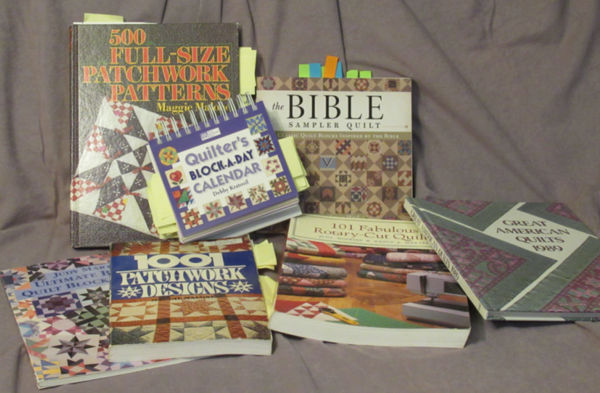
When I get a new book, I go through it and mark patterns I can do. In that book, I found more than twenty patterns I might like to try. That comes to about five cents per. That’s a bargain.
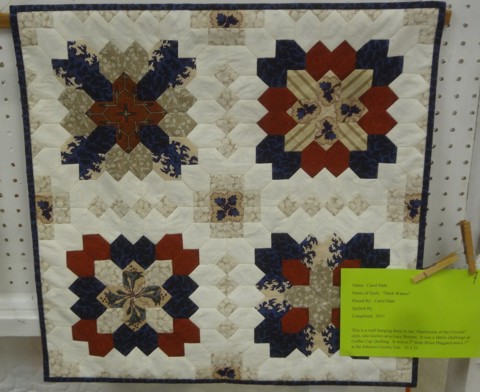
I also take pictures at the shows. It was at a show in Franklin, IN a couple of years ago that I first saw the “Lucy Boston/Patchwork of the Crosses” pattern. I took a few pictures, and made a few of pieces with it. It has become a real favorite—though it is probably the most difficult one I do. It always gets a lot of comments at the shows.
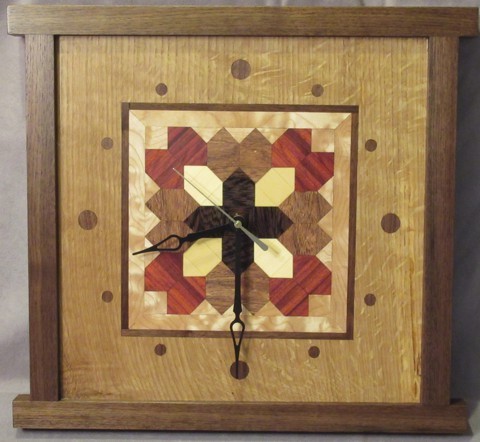
When I find a pattern I like, I scan it into my computer, resize it to about the size I will do, and print it out as a single sheet. I use that sheet in the shop as a guide, both to build the pattern and to mark as a record of the wood I use. After I complete a wooden quilt pattern, I scan it to prepare the wood identification sheet I give with each piece I sell. I then use those sheets for further reference when I repeat a pattern on future pieces. That way, I have accumulated quite a library of patterns, most of which I use over and over. But no matter how many times I use a pattern, even with the same wood choices, because wood varies so much, no two pieces are ever exactly alike.
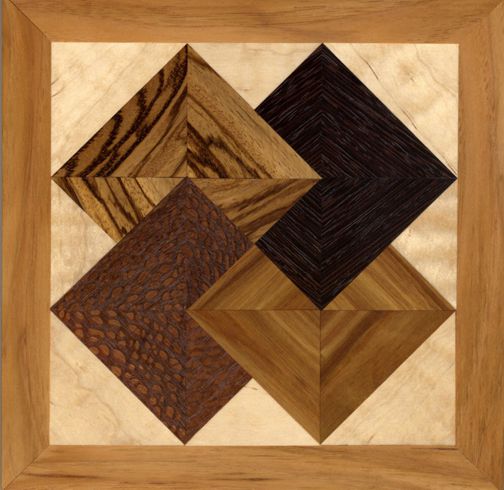
This Card Trick trivet contains not only native woods Pecan (the border) and Curly Maple (the white wood), but also imported exotics: Zebrawood, Wenge. Leopardwood, and Canarywood.